 By Nion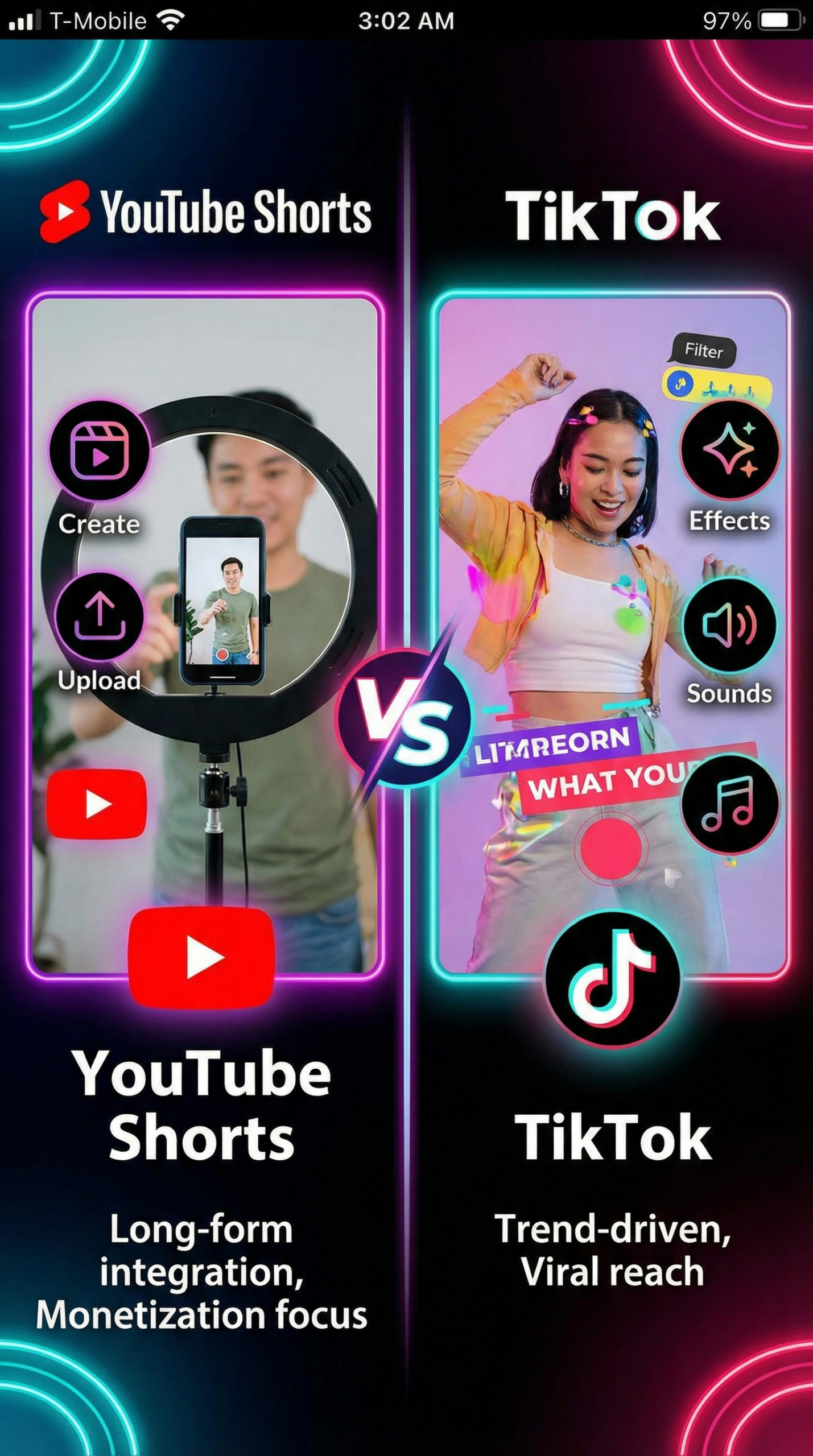
YouTube Shorts vs TikTok: The Ultimate Creator’s Guide to Short-Form Video in 2026
Short-form video has become the dominant content format across the internet, and two platforms are fighting for creator attention: YouTube Shorts and TikTok. Both offer the chance to reach massive audiences with vertical, sub-60-second videos, but they operate on fundamentally different algorithms, serve different audience behaviors, and offer distinct monetization paths. Choosing where to invest your creative energy—or understanding how to master both—can make the difference between growing your channel and spinning your wheels.
This guide breaks down everything creators need to know about YouTube Shorts vs TikTok in 2026: algorithm mechanics, audience demographics, monetization, and which platform is right for your goals.
Algorithm Mechanics: How Each Platform Discovers and Distributes Your Content
TikTok built its empire on the For You Page (FYP)—a fully interest-graph-driven feed that aggressively pushes new creators to massive audiences with zero followers. TikTok tests every video with a small audience first; if early engagement signals are strong (watch-through rate, likes, shares, comments), it progressively distributes to larger and larger pools. This means a brand-new account can go viral on day one with the right video.
YouTube Shorts operates within YouTube’s broader ecosystem. The Shorts feed works similarly to TikTok’s FYP in terms of interest matching, but it also benefits from subscribers, search intent, and long-form channel authority. Creators with established YouTube channels get a head start on Shorts distribution, while new creators face a slightly longer ramp-up than on TikTok. The upside: a viral Short can funnel viewers to a creator’s long-form library, a monetization path TikTok can’t replicate.
Audience Demographics and Content Culture
TikTok skews younger—60% of its user base is between 16–34 years old—and favors fast-paced, trend-driven content: audio trends, challenges, duets, stitches, and raw authentic moments. The platform culture rewards creativity and personality above production quality. A phone-shot video filmed in a car can outperform a studio-produced clip.
YouTube Shorts attracts a broader demographic, including significant audiences aged 25–45 who use YouTube as their primary video destination. Shorts content that performs best on YouTube tends to be more educational, tutorial-driven, or directly connected to a broader content series. Think quick tips, product reviews, and explainer clips that leave viewers wanting to watch the full version on the channel.
Both platforms support music integration, text overlays, green screen effects, and closed captions—but TikTok’s creative editing tools and trend discovery remain more robust for entertainment creators.
Monetization: Where Creators Actually Make Money
This is where the two platforms diverge most significantly. YouTube’s Partner Program pays creators through ad revenue on Shorts and long-form content combined, and YouTube Shorts has seen dramatically improved revenue payouts since 2024 following the Creator Pool monetization restructuring. Creators with monetized channels earn a share of ad revenue from Shorts views, with RPMs typically ranging from $0.03 to $0.08 per view—modest but growing.
TikTok’s Creator Rewards Program pays based on video performance metrics including watch time and new viewer reach, with rates that have historically been criticized for being very low ($0.02–$0.04 per 1,000 views). TikTok LIVE gifts and brand partnerships often generate significantly more creator income than the Creator Rewards Program itself.
For most creators, YouTube Shorts offers better long-term monetization potential through the combination of Shorts revenue, long-form ad revenue, memberships, Super Thanks, and merch integration. TikTok monetizes better through brand deals for creators with large, highly engaged niche audiences.
Cross-Posting Strategy: Should You Post on Both?
Most successful creators in 2026 cross-post short-form content across both platforms—with minor adjustments. Remove TikTok watermarks before uploading to Shorts (YouTube penalizes watermarked content in distribution). Adjust aspect ratio and text placement for each platform’s safe zones. Consider whether a piece of content fits the culture of each platform before posting blindly.
A workflow that works: film once, edit for TikTok first (trend sounds, TikTok effects), then export a clean watermark-free version for YouTube Shorts, Instagram Reels, and Facebook Reels. One video can serve 4–5 platforms with 15–20 minutes of extra editing work.
YouTube Shorts vs TikTok: Platform Comparison (2026)
| Feature | YouTube Shorts | TikTok |
|---|---|---|
| Max video length | 3 minutes | 10 minutes (short-form feed: 60 sec) |
| Algorithm for new creators | Moderate — channel authority helps | High — FYP can boost anyone immediately |
| Primary audience age | 18–45 | 16–34 |
| Monetization (views) | Ad revenue share (~$0.03–0.08/1K) | Creator Rewards (~$0.02–0.04/1K) |
| Brand deal ecosystem | Strong (YouTube creator market) | Very strong (influencer-first culture) |
| Long-form synergy | Excellent — drives channel subs | Minimal |
| Search discoverability | High (Google/YouTube search) | Low (FYP-first) |
| Trend velocity | Slower | Very fast (24–48hr trends) |
| Best content type | Educational, tutorials, entertainment | Trends, humor, personality, challenges |
FAQ: YouTube Shorts vs TikTok
Which platform is better for growing a new audience from zero?
TikTok. Its For You Page algorithm is designed to give any video—regardless of follower count—a chance at wide distribution if the content quality and early engagement signals are strong. Many creators have reached 100K+ followers on TikTok within weeks, while the same growth on YouTube Shorts typically takes 3–6 months of consistent effort due to its heavier reliance on channel authority and subscriber base.
Can I use the same video on both platforms?
Yes, but with adjustments. Always remove TikTok watermarks before uploading to YouTube Shorts, as YouTube’s algorithm actively suppresses watermarked content. Also adjust text overlays to fit each platform’s UI safe zones, and consider whether a TikTok audio trend will make sense on YouTube where the same sound hasn’t gone viral. Minor re-edits go a long way in performance.
Which platform pays creators more per view?
YouTube Shorts generally pays more per view through its ad revenue share model, especially when combined with a monetized channel. However, top TikTok creators often earn substantially more through the platform’s robust brand partnership ecosystem, LIVE gifts, and Series paywall features. The “better” platform for income depends heavily on your niche, audience size, and monetization strategy.
How long should short-form videos be for maximum reach?
On TikTok, videos between 21–34 seconds consistently show the highest completion rates and FYP distribution for entertainment content, while educational content often performs better at 45–60 seconds. On YouTube Shorts, the extended 3-minute cap is rarely worth using for pure short-form—videos of 45–90 seconds tend to perform best. Both platforms reward high watch-through rates above everything else.
Is TikTok’s future stable enough to invest in?
TikTok has faced regulatory challenges in multiple countries, including the US, but as of 2026 remains operational under its revised ownership structure. That said, smart creators treat TikTok as one distribution channel, not their entire platform. Build your audience on TikTok, but funnel them to YouTube, email lists, or your own website so your business isn’t solely dependent on any single platform’s continued existence.